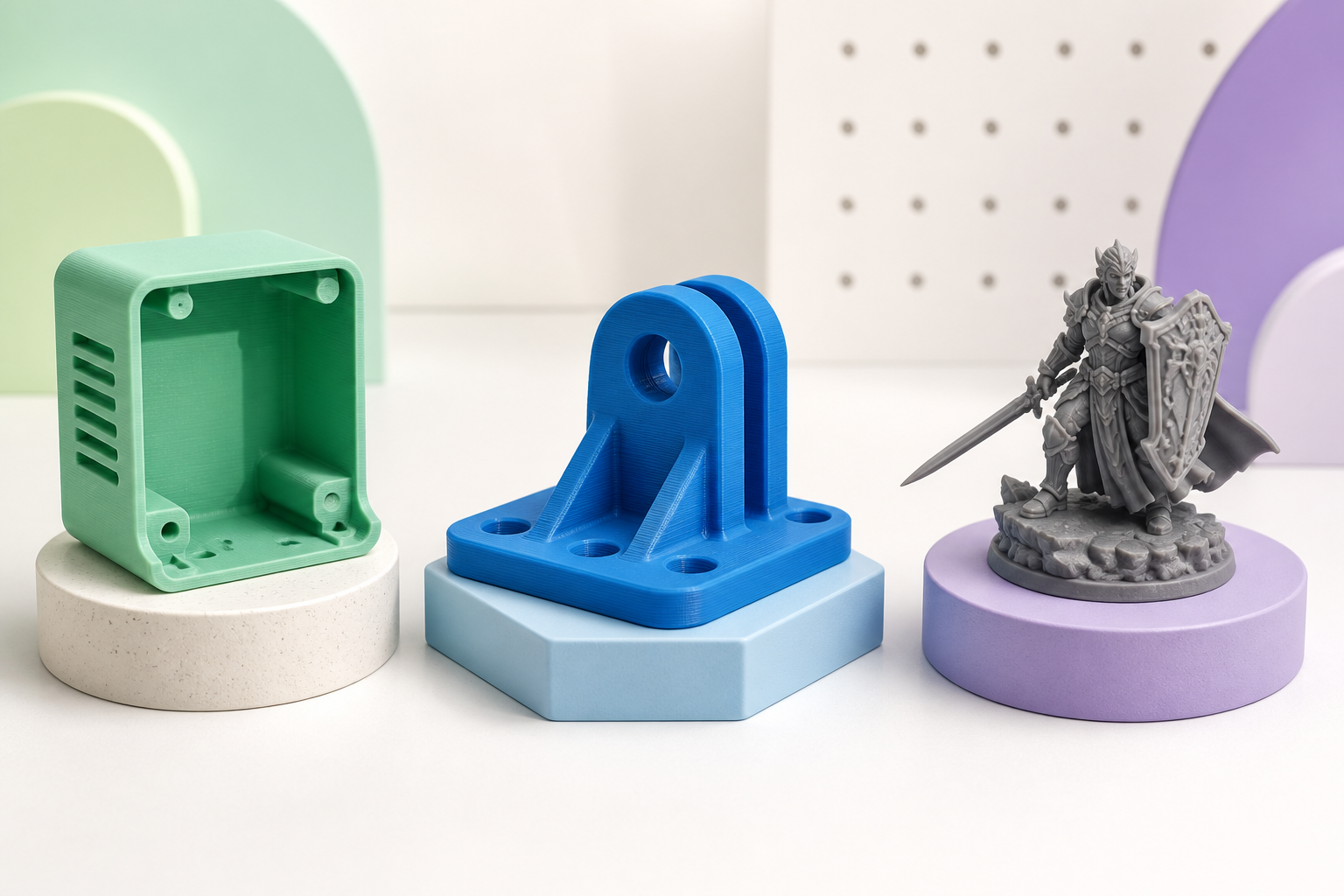
PLA vs PETG vs Resin: What’s the Difference?
If you are ordering a custom part, prototype, or display piece, one of the first questions is often about material. PLA, PETG, and resin all have their place, but they are good at different jobs.
This quick guide explains the practical difference between PLA vs PETG vs resin so it is easier to choose the right material for your project.
PLA vs PETG vs resin at a glance
- PLA is usually the simplest choice for visual models, concept parts, and many everyday prints.
- PETG is often better when a part needs more toughness, better moisture resistance, or a bit more heat tolerance.
- Resin is usually chosen for fine detail, smoother surfaces, and parts where appearance matters more than rough functional use.
The best material depends less on what sounds most advanced and more on how the part will actually be used.
When PLA is a good choice
PLA is a good all-round starting point for many custom prints. It works well for prototypes, mock-ups, display parts, organisers, and light-duty parts that are not going to face much heat or stress.
PLA is often a sensible choice when you want:
- a cost-effective prototype
- a quick visual model
- a simple bracket, guide, or holder for indoor use
- a print where looks and shape matter more than long-term wear
For many first-time customers, PLA is enough. It keeps things simple and works well for a wide range of straightforward jobs.
When PETG makes more sense
PETG is often the better pick when a part needs to do more real work. It is usually tougher than PLA, less brittle in everyday handling, and better suited to parts that may deal with moisture, repeated use, or slightly warmer conditions.
PETG is often a strong option for:
- replacement plastic parts
- brackets and mounts
- workshop helpers
- covers and enclosures
- prototypes that need to be handled and tested properly
If the part is meant to last longer or cope with more use, PETG is often worth considering over PLA.
When resin is the better fit
Resin is usually chosen for detail and finish rather than general-purpose toughness. It is a strong option when you want crisp detail, smoother surfaces, and a more refined final look.
Resin is commonly used for:
- miniatures and display pieces
- highly detailed prototypes
- decorative parts
- small components where fine surface detail matters
Resin is not automatically the best choice for functional parts that will be knocked around in normal use. It shines when detail and presentation are the priority.
Which material is best for your project?
The easiest way to think about PLA vs PETG vs resin is this:
- choose PLA for many simple prototypes and everyday prints
- choose PETG for more practical or hard-wearing parts
- choose resin for detail-heavy display pieces or refined visual parts
There is no single best material for every job. The right choice depends on where the part will live, how much stress it will take, and whether you care most about strength, finish, detail, or cost.
Final thoughts
Understanding PLA vs PETG vs resin helps you avoid picking a material based on guesswork. A simple prototype, a functional replacement part, and a detailed display model may all need different approaches to get the best result.
If you already have a part in mind, send over a photo, sketch, or short description and we can help you choose the right material for the job.
