PETG 3D Printing: Why It Is Such a Versatile Material
If you have looked into 3D printing for a custom part, prototype, or replacement piece, you have probably seen a few material names come up again and again. One of the most useful is PETG.
PETG is a versatile 3D printing material because it sits in a very practical middle ground. It is usually tougher than PLA, less brittle in day-to-day use, and better suited to parts that may see light heat, moisture, or regular handling. For a lot of real-world print jobs, that balance makes it a strong all-round option.
Why PETG 3D printing works so well
The main reason PETG 3D printing is so useful is that it combines several qualities that people often want at the same time:
- good strength for functional parts
- a bit of flex instead of snapping too easily
- better moisture resistance than many basic hobby materials
- better heat tolerance than PLA for everyday environments
- a clean, durable finish for practical use
That does not mean PETG is the perfect material for every job. It means it is one of the most adaptable choices when you need a printed part to be more than just a visual mock-up.
Where PETG is a strong choice
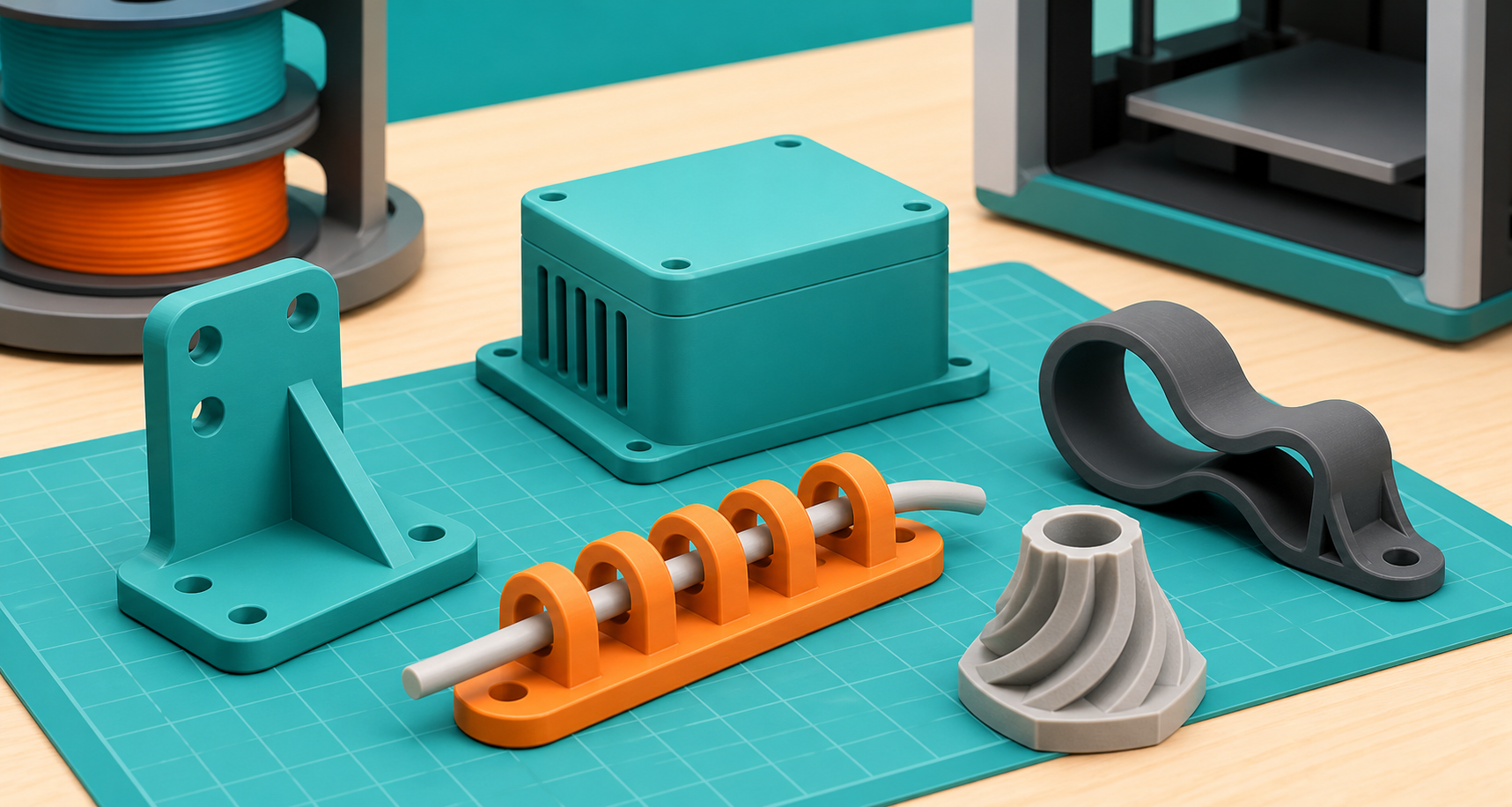
PETG is often a good fit for parts that need to do actual work rather than just look the part. Examples include:
- brackets and mounting parts
- cable guides and organisers
- covers and enclosures
- workshop helpers and light-duty fixtures
- replacement plastic parts
- prototypes that need to be handled and tested properly
This is where PETG stands out. It is useful for jobs that need more toughness and durability than a basic display print, without jumping straight into more demanding engineering materials.
PETG for custom replacement parts
One of the best uses for PETG is replacing small plastic parts that break in normal use. A clip, cover, handle piece, spacer, or bracket can fail long before the rest of the item is worn out.
In those cases, PETG is often a sensible material because it can cope better with repeated handling and light real-world stress than more brittle options. If the part lives in a kitchen, utility room, workshop, garage, or a slightly warmer environment, PETG can also be a safer choice than PLA.
Not every replacement part should be printed, especially if it is safety-critical or under heavy mechanical load, but for the right job PETG can be a very practical solution.
PETG for prototypes and small business use
PETG is also useful for prototypes, jigs, and custom business parts. If you need to test how something fits, how it mounts, or how it holds up in everyday use, PETG gives a more functional result than a purely cosmetic prototype.
That makes it a strong option for:
- internal tool holders
- packaging or assembly helpers
- retail display supports
- simple workshop fixtures
- low-volume custom parts for repeated use
For small businesses, that versatility matters. A single material that works across repairs, prototypes, organisers, and custom fittings makes the overall process simpler.
PETG compared with other common materials
The easiest way to think about PETG is as a middle-ground material.
PLA is often the simplest material for basic prints and visual models, but it can be less forgiving when a part needs durability or extra heat resistance. ABS and similar materials can be very capable, but they are not always the best first choice for every custom print workflow.
PETG often lands in the sweet spot for practical parts because it gives you a useful mix of strength, durability, and everyday resilience without overcomplicating the job.
When PETG may not be the best choice
PETG is versatile, but it is not universal.
Depending on the job, another material may be better if you need:
- very high temperature performance
- very soft or rubber-like flexibility
- a very specific surface finish
- heavy structural performance
Material choice should follow the use case. The best result usually comes from matching the part to the environment it will live in and the kind of stress it will see.
Final thoughts
PETG is a versatile 3D printing material because it covers so many practical use cases well. It is strong enough for many functional parts, durable enough for regular handling, and adaptable enough for repairs, prototypes, and small-batch custom work.
If you are not sure which material suits your part, that is normal. The right choice depends on how the part will be used, where it will live, and what matters most: strength, flexibility, finish, heat resistance, or cost.
If you have a part in mind, send over a photo, sketch, or description and we can help you decide whether PETG is the right fit.
